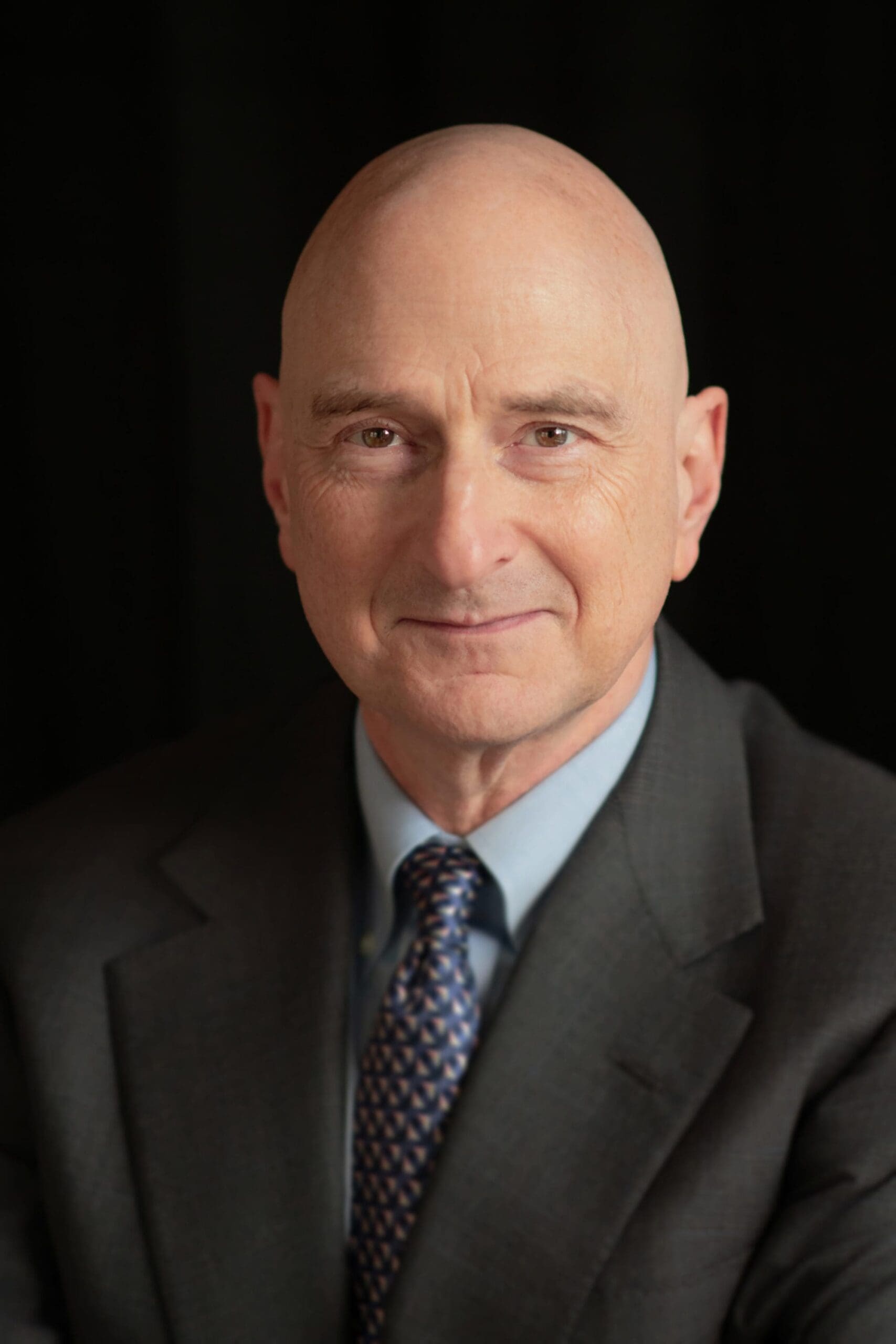
Over a 40-year career, Steve has successfully briefed and argued cases spanning a vast range of legal fields, including complex business and contract disputes; arbitration; intellectual property; antitrust/unfair competition; class actions; anti-discrimination; legal-malpractice defense; and First Amendment, constitutional, and administrative law.
His clients have included major corporations such as Google, Intel, Genentech, Qualcomm, Coinbase, Lyft, Electronic Arts, and AT&T, as well as prominent law firms and individuals in civil and criminal cases.
Steve’s core practice beliefs are that writing well matters, that briefs should tell a compelling story, and that framing the issues to the client’s advantage is critical to success on appeal.
He worked for decades at Keker, Van Nest & Peters LLP in San Francisco, where he was the only partner devoted primarily to appeals. He has taught appellate advocacy and legal writing at the Yale, Stanford, and Berkeley Law Schools.
He uses his legal skills to protect democratic norms and institutions and voting rights. In 2016, he served as a Regional Director for Voter Protection for the Clinton campaign in Ohio. He has worked extensively with Protect Democracy, Citizens for Responsibility and Ethics in Washington (CREW), and States United Democracy Center, writing briefs for those organizations in numerous matters bearing on the health of our democracy.
In that capacity, he has written amici briefs for such legal luminaries as Laurence Tribe, Erwin Chemerinsky, Geoffrey Stone, Lee Bollinger, Martha Minow, Floyd Abrams, and Bruce Ackerman.
Steve has been named California Lawyer Attorney of the Year (CLAY) by California Lawyer Magazine and San Francisco Appellate Practice Lawyer of the Year by Best Lawyers in America. The Bar Association of San Francisco has presented him with its Award of Merit and the Minority Bar Coalition of the San Francisco Bay Area has presented him with its Unity Award. He has been listed as a Northern California Super Lawyer for decades and by Best Lawyers in America since 2010. He also was elected by the judges of the U.S. Court of Appeals for the Ninth Circuit to serve as an Appellate Lawyer Representative to the Circuit’s Judicial Conference, and he is a member of the California Academy of Appellate Lawyers.
He is President of the Board of California Lawyers for the Arts and formerly served as a member of the Boards of the Bar Association of San Francisco and BASF’s Justice and Diversity Center.
Steve also obtained a Master of Public Administration from Columbia University. After law school, he clerked for the Honorable I. Leo Glasser of the U.S. District Court for the Eastern District of New York.
Judge I. Leo Glasser
Yale Law School
California Lawyer Attorney of the Year (CLAY) Award California Lawyer Magazine
San Francisco Appellate Practice Lawyer of the Year Best Lawyers in America
Award of Merit Bar Association of San Francisco
Unity Award Minority Bar Coalition of the San Francisco Bay Area
California
Connecticut
District of Columbia
New York
U.S. Court of Appeals First, Second, Third, Eighth, Ninth, Eleventh, District of Columbia, and Federal Circuits
U.S. Supreme Court
On interlocutory review, obtained vacatur of the district court’s unprecedented order certifying largest class action in history (250 million members and a billion sales transactions), based in part on the district court’s erroneous choice-of-law analysis.
Represented Google on appeal in a high-profile case in which Oracle claimed $8.8 billion in damages based on its claim that Google’s Android operating system infringed Oracle’s copyrights in various Java API packages; Oracle eventually lost the case on fair-use grounds in the U.S. Supreme Court.
Successfully challenged the jury’s $200 million punitive-damages award against Genentech, because punitive damages cannot be awarded for breaching a contract and no fiduciary relationship existed between the contracting parties.
Obtained a ruling that, under California law, a dissolved law firm has no property interest in legal matters handled on an hourly basis, and therefore no property interest in the profits generated by its former partners’ work on hourly-fee matters that remained pending when the firm dissolved.
Won affirmance of a ruling that a state agency’s regulations protecting the rights of construction-trades apprentices on public-works construction sites fell within the scope of its rulemaking authority, and that the agency’s assessment of the regulations’ economic impact substantially complied with the requirements of the Administrative Procedure Act.
Obtained groundbreaking and much-cited ruling that an alien was entitled to release on bail after being imprisoned for two years and eight months during his removal proceedings, either because detention for that period did not conform to Immigration and Nationality Act’s mandatory-detention provision or because detention for that period violated the alien’s due-process rights.
On behalf of four “Unabomber” victims, won a ruling upholding the district court’s plan to auction Kaczynski’s “Manifesto,” along with other personal property seized from his Montana cabin, to pay victim restitution.
On behalf of a leading cryptocurrency exchange, obtained reversal of the district court’s judgment because the court erroneously dismissed the case against the exchange instead of staying it until arbitration was completed, as required by Section 3 of the Federal Arbitration Act.
Obtained peremptory writ of mandate on behalf of major law firm; Court of Appeal ruled that the legal fees that a client spent in an unsuccessful attempt to overturn a marital settlement agreement did not represent possible tort damages in legal-malpractice suit.
Won affirmance of a ruling dismissing a legal-malpractice complaint against a major law firm for lack of jurisdiction where the case raised a substantial issue of federal patent law.
Representing Google, won affirmance of the district court’s summary-judgment ruling that the plaintiff’s patent claims were anticipated by posts in an internet newsgroup.